
Slip risk increases
Untreated wet or grimy stair nosings and corridor floors are one of the most common causes of slips in shared buildings, and the risk rises sharply in wet weather without a proper matting and drying routine.

Passageways, Corridors & Stairs
The routes people walk through say more about a building than any lobby feature ever could, and they're also the hardest spaces to keep looking right, because they're used constantly and cleaned inconsistently. We run a fixed schedule for entrance matting, handrails, stair nosings and every metre of passageway between them, verified after every single visit.
Free site visit, tailored quote, no obligation: insured and quality-checked after every visit.

Insured
Public liability and employers' liability cover held.
Vetted teams
Every cleaner trained and trialled under supervision before working unsupervised.
Checked every visit
A quality check follows each clean along the full route, not a sample of it.
Fixed, reliable schedule
Daily or several-times-weekly visits agreed at the site visit, not left informal.
Overview
Passageways, corridors and stairs are the connective tissue of any multi-occupancy building: the routes everyone uses to get from the entrance to their flat, office or unit. Unlike a lobby, these areas rarely get a second look from a designer or a deep clean team, yet they see more continuous footfall than almost any other part of the building, which is exactly why they wear out and look tired faster than anywhere else.
This service is for building managers, managing agents, landlords and facilities teams responsible for shared circulation routes in residential blocks, office buildings, retail parades or mixed-use developments. It suits any building where more than one occupier or resident shares the same entrance matting, corridor carpet, handrails and staircases, and where the state of those routes reflects on management rather than any single tenant.
Cleaning is needed on a fixed, frequent schedule because these are the areas hit hardest by dirt, grit and moisture tracked in from outside: entrance mats and stair nosings in particular take the brunt of it. Professional attention matters because handrails and stair edges are also safety features, not just cosmetic ones, and because a passageway that's cleaned inconsistently becomes the clearest visible sign to residents, staff or visitors that a building isn't being properly looked after.
The Cost of Leaving It
These are the most walked, least noticed spaces in any building, until they're neglected, at which point everyone notices at once.
Untreated wet or grimy stair nosings and corridor floors are one of the most common causes of slips in shared buildings, and the risk rises sharply in wet weather without a proper matting and drying routine.
Sand and grit tracked in on shoes acts like sandpaper on hard flooring and carpet fibres if it isn't removed regularly, wearing down finishes far faster than the traffic alone would.
Handrails are touched by nearly everyone who uses the stairs, and an ungrimed rail is one of the most obvious, most personal signs of neglect in a building.
Corridors and stairs are seen daily by every occupier, so a decline here is noticed faster and by more people than almost any other part of a building.
Our Process
We assess the specific routes, materials and footfall of a building before proposing a schedule.
We walk every corridor, stairwell and passageway with the building manager, checking flooring type, entrance matting, handrail material and current wear patterns.
We provide a written quote setting out frequency and method for each route (entrance matting, corridor floors, stair treads and nosings, and handrails)based on actual footfall.
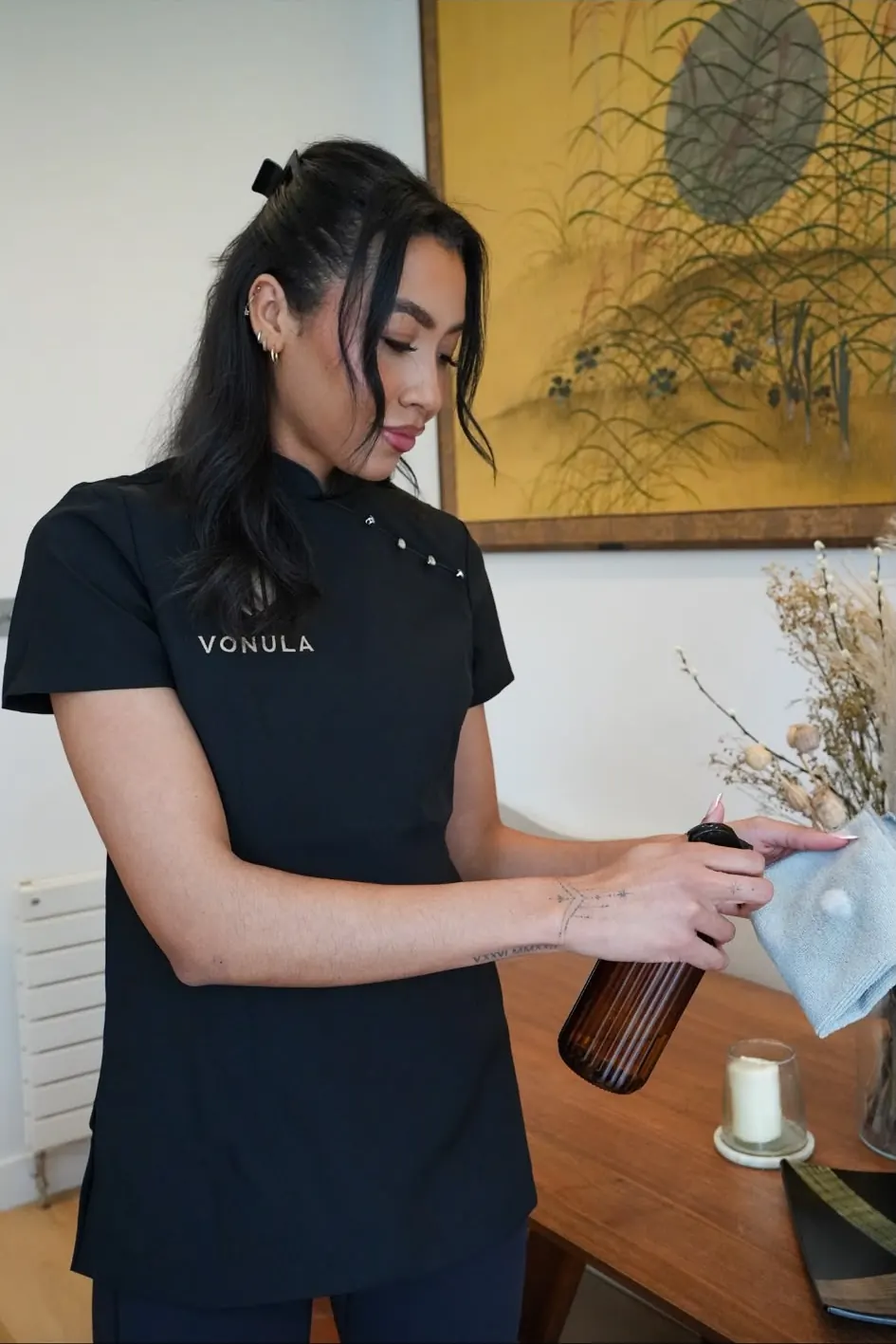
A uniformed, vetted team cleans the agreed routes on the fixed schedule, using Vonula-supplied eco-friendly products suited to each floor and rail material.
Each visit is checked along the full route before the team leaves, so no stretch of corridor or stairwell is missed.
The schedule continues on a predictable, fixed basis and is reviewed whenever footfall changes, such as after a new occupier moves in or weather conditions shift.
Benefits
Getting the routes right protects safety, appearance and the building's underlying materials at the same time.
A fixed, frequent schedule means grit and marks are removed before they accumulate, rather than being tackled after they've built up.
Proper matting and prompt attention to stair nosings and wet floors reduces one of the most common causes of slips in shared buildings.
Removing grit and grime regularly prevents the accelerated wear that grit causes on carpet fibres and hard floor finishes.
Preventing wear through regular cleaning delays expensive re-carpeting, re-finishing or rail replacement.
Every corridor and stairwell is held to the same checked standard, not just the ones near the entrance.
One insured, vetted contractor covering every shared route removes the gap where corridors fall between other cleaning contracts.
In Detail
These routes combine several materials that each need specific care to stay safe and presentable.
Passageways typically combine carpet or hard flooring underfoot, painted or wallpapered walls at hand height, metal or timber handrails, and stair nosings finished in rubber, metal or stone. Entrance matting sits at the very start of the route and does the most work of any single element in keeping the rest of the building clean.
Corridors are vacuumed or mopped depending on the floor covering, with particular attention to edges and stair nosings where grit collects. Handrails are wiped with eco-friendly, appropriate products on every visit given how frequently they're touched, and entrance matting is checked, vacuumed and, where necessary, replaced or rotated to keep it doing its job of trapping dirt before it spreads.
Frequency varies by building type: a busy office stairwell may need daily attention, while a quieter residential corridor might be scheduled several times a week. Wet-weather periods often warrant a temporary increase in frequency to manage the extra grit and moisture being tracked in.
This service applies across residential blocks, office buildings, retail parades and mixed-use developments: anywhere multiple occupiers share the same circulation routes. In residential blocks it typically runs alongside lobby and lift cleaning as part of a wider communal contract, while in commercial buildings it's often specified separately from the demised office or unit cleaning.
Common Questions
Anything not covered here, Ricky Manderson will answer on the phone, 020 8064 3311.
We assess the length and material of the routes during a free site visit, then provide a tailored, itemised quote based on the actual footfall and floor types rather than a flat rate per building.
Once we've agreed the specification following the site visit, we can typically schedule a team to begin promptly, so there's minimal delay between deciding to act and seeing results.
Every agreed corridor, stairwell and passageway (floors, stair nosings, handrails and entrance matting)cleaned to the specification using our own eco-friendly products.
Every visit is checked along the full length of the corridors and stairs before the team leaves, so no section is missed or left below standard.
This depends on footfall: busy commercial stairwells often need daily attention, while quieter residential corridors may only need a few visits a week. We set the right frequency during the site visit and adjust it if conditions change.
Yes, we can agree a temporary increase in visits during periods of heavy rain or snow when far more grit and moisture is tracked into corridors and stairwells than usual.
Yes, Vonula holds public liability and employers' liability insurance, and every cleaner is vetted and trained before working unsupervised.
Yes, we regularly work in buildings with concierge-controlled entrances, service routes and limited parking across Belgravia, Holland Park and the wider Central London area, and we agree access details during the site visit.
Communal areas kept to a standard that matches the service charge: lobbies, lifts and shared floors residents never have to think about.
View serviceContractual daily or three-times-weekly cleaning across the whole building, not just the desks.
View serviceFront-of-house and back-of-house standards that hold up to the scrutiny of a five-star guest.
View serviceNew here? Start with luxury commercial cleaning in Central London, read our story, see client reviews or request a free site visit.
Next Step
Book a free site visit and we'll return with a tailored, itemised quote covering every corridor, stair and passageway. A vetted, insured team then keeps the whole route to a fixed, checked standard.