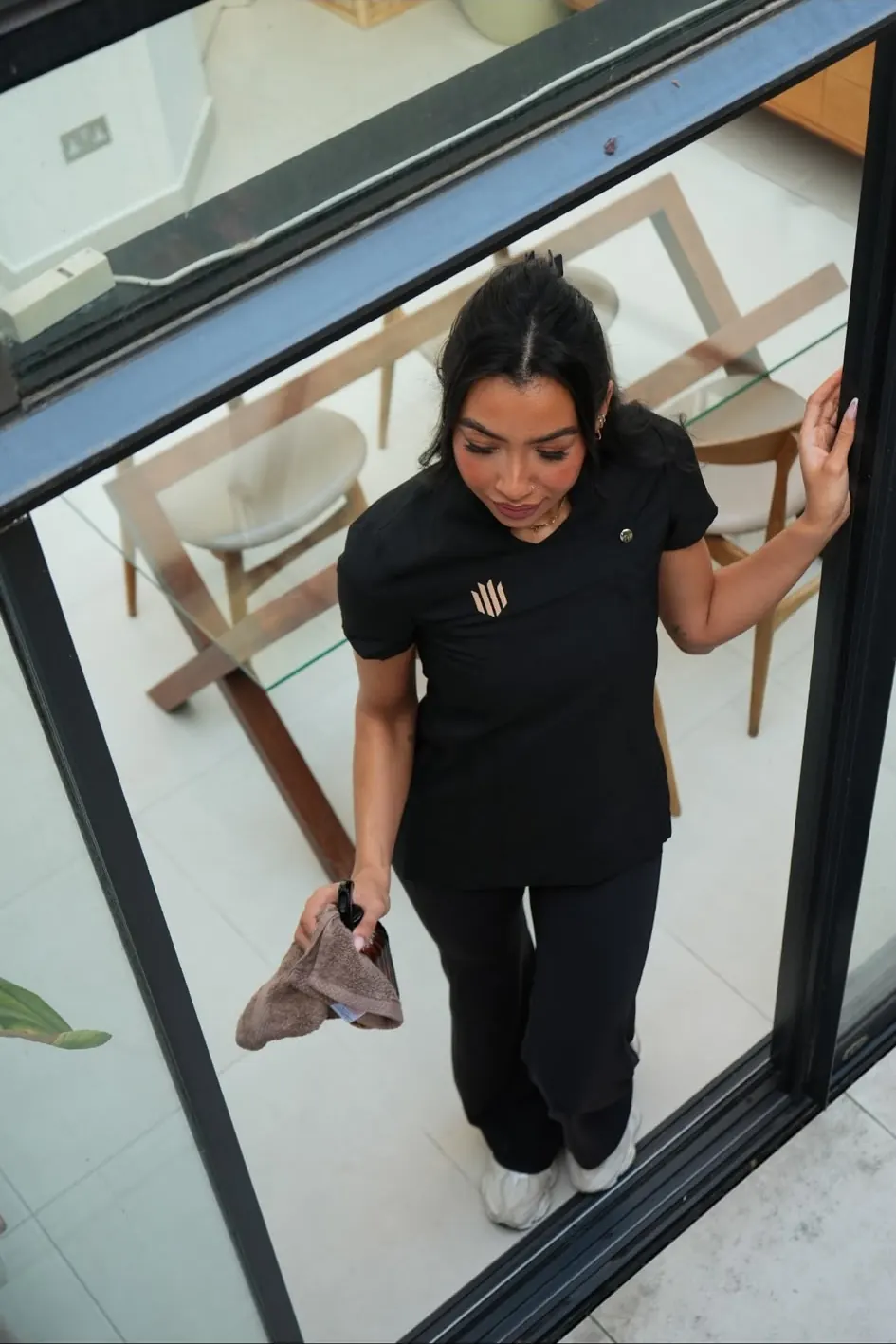
Grade A office space is defined by its scope (the finishes, the glazing, the stone and engineered timber in reception, the acoustic panelling in boardrooms, the sensor-lit corridors)and every one of those specified surfaces has a correct way to be cleaned and a wrong way that dulls or damages it within months. Grade A office cleaning is the discipline of maintaining that scope day after day: reception desks and feature walls kept free of fingerprints and dust, boardroom tables and glass partitions cleaned to a genuine streak-free finish before every meeting, washrooms and end-of-trip facilities (showers, lockers, drying rooms) held to a standard that supports the wellbeing claims the building was marketed on, and communal floors and lift lobbies kept to the finish the service charge is paying for.
This service is for landlords, managing agents and occupiers of prestige commercial buildings across Central London: the kind of space let to law firms, asset managers, media companies and headquarters functions who expect their environment to say something about them before anyone speaks. It is for facilities managers who are accountable to a building owner or an occupier's board for standards that get audited, referenced in service charge reviews, or simply noticed the moment a client walks in. It suits both single-occupier headquarters and multi-let Grade A buildings where common parts need to match whatever standard the best tenant on the floor is holding itself to.
Professional, scope-led cleaning matters here because Grade A finishes are expensive to replace and unforgiving of poor practice: the wrong pad on natural stone, the wrong chemical on brushed metal, or cleaning glass with an ordinary spray leaves marks that no amount of buffing later removes. It also matters operationally: cleaning has to happen without ever being seen, which means working early morning or evening, within our 8am to 8pm hours, seven days a week, coordinating with building management, security and access control, and leaving zero trace that anyone was there. Getting this wrong either damages the fabric of the building or disrupts the working day it was built to support; getting it right is invisible, which is exactly the point.